Make useful study flashcards from your own notes
Turn a lesson into focused questions, then use mistakes to guide your next review.
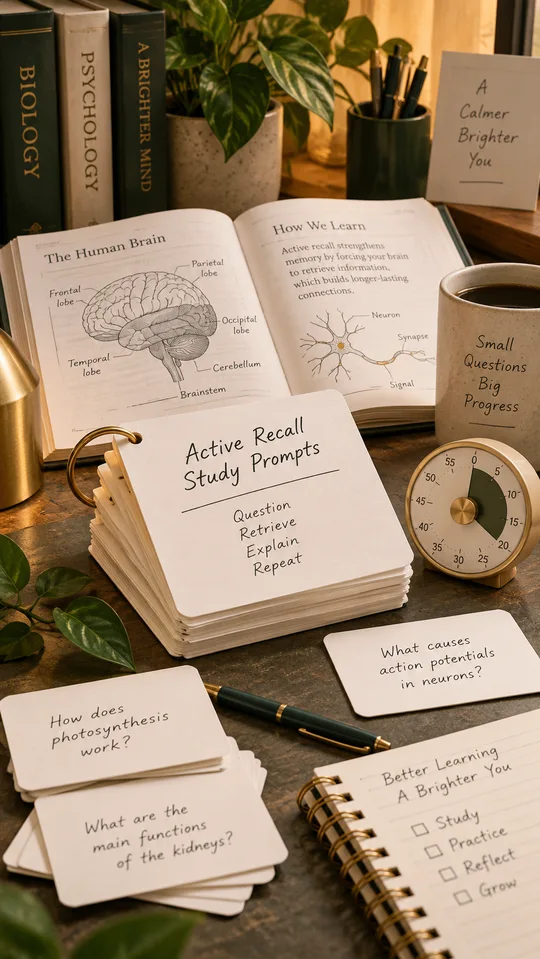
A flashcard is useful when it asks you to retrieve one idea. A card that contains an entire paragraph can be difficult to answer consistently. Start with notes you understand and can verify. The example here is a basic science lesson, but the same structure can be adapted to language learning or history.
Pick the learning goal
Choose whether you need definitions, comparisons, sequences or applications. Do not mix every detail from a chapter into one deck. Mark the parts you have not yet understood; ask for an explanation before turning them into questions. Otherwise you may memorize an inaccurate or confusing answer.
Request one question per card
Keep each answer short enough to check. Split a question with three independent parts into three cards. Include a few application questions so the deck tests more than wording. Supply the relevant notes and ask the model to stay within them.
Try this prompt
Using only my lesson notes below, create eight flashcards about the water cycle. Each card should test one idea. Return a table with question, concise answer and supporting note label. Include two questions that apply the idea to an everyday observation. Flag unclear statements instead of inventing explanations. Keep rain formation and evaporation as separate concepts when a single question would become too broad.
Verify before reviewing
Check each answer against your textbook or teacher’s material. Remove cards that depend on an ambiguous pronoun such as “it” without context. If several answers could reasonably fit a question, rewrite the question. The model’s source label is a starting point for checking, not independent evidence.
Use errors as feedback
Attempt an answer before revealing the back of the card. Keep track of the concepts you miss, then revisit the relevant lesson section. Rewrite cards that are confusing rather than repeatedly marking them wrong. Short, regular review sessions with a manageable deck are easier to sustain than collecting hundreds of unreviewed generated cards.
Put the idea into practice.
Find a starting point in the prompt library and adapt it to your task.
Explore prompts →